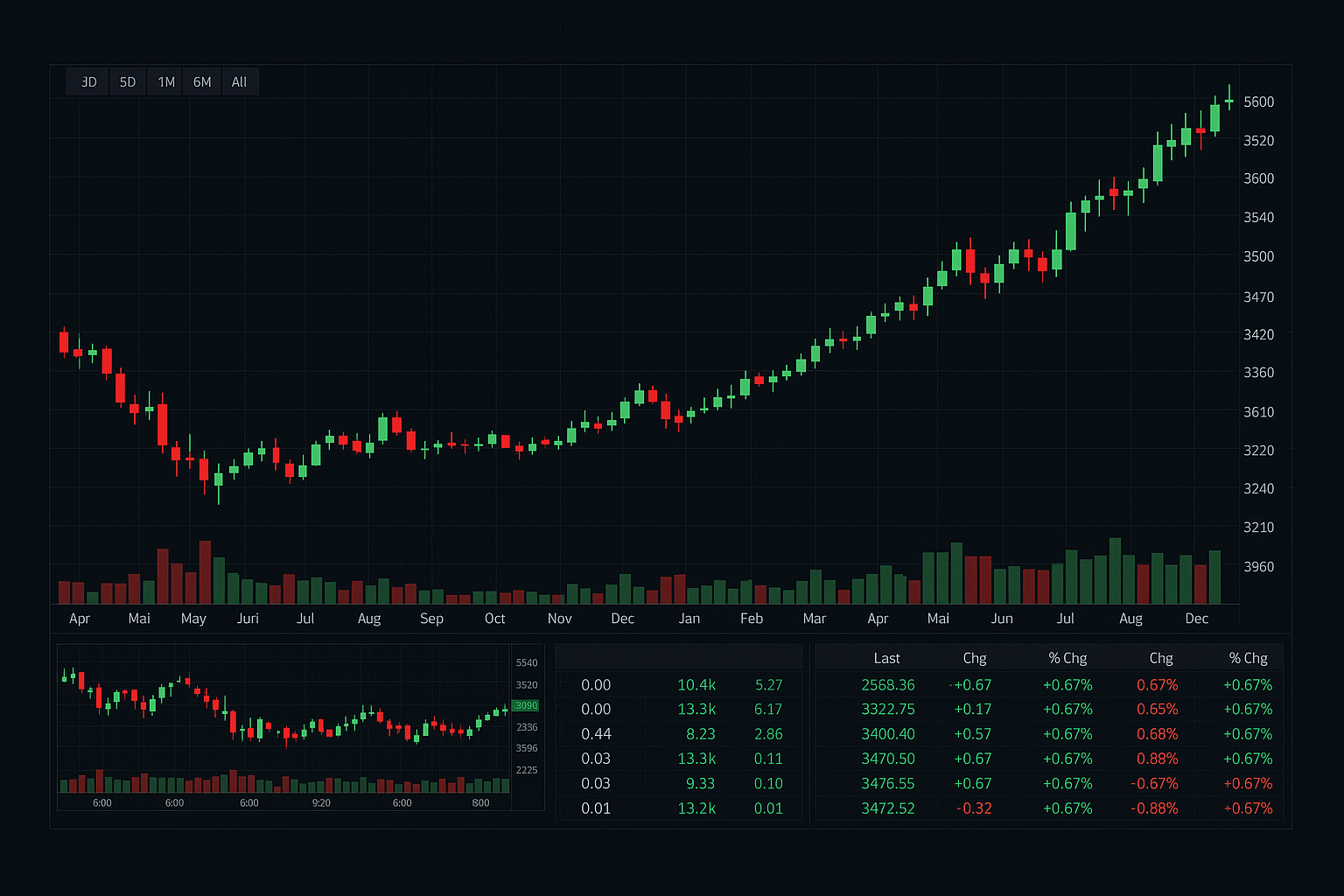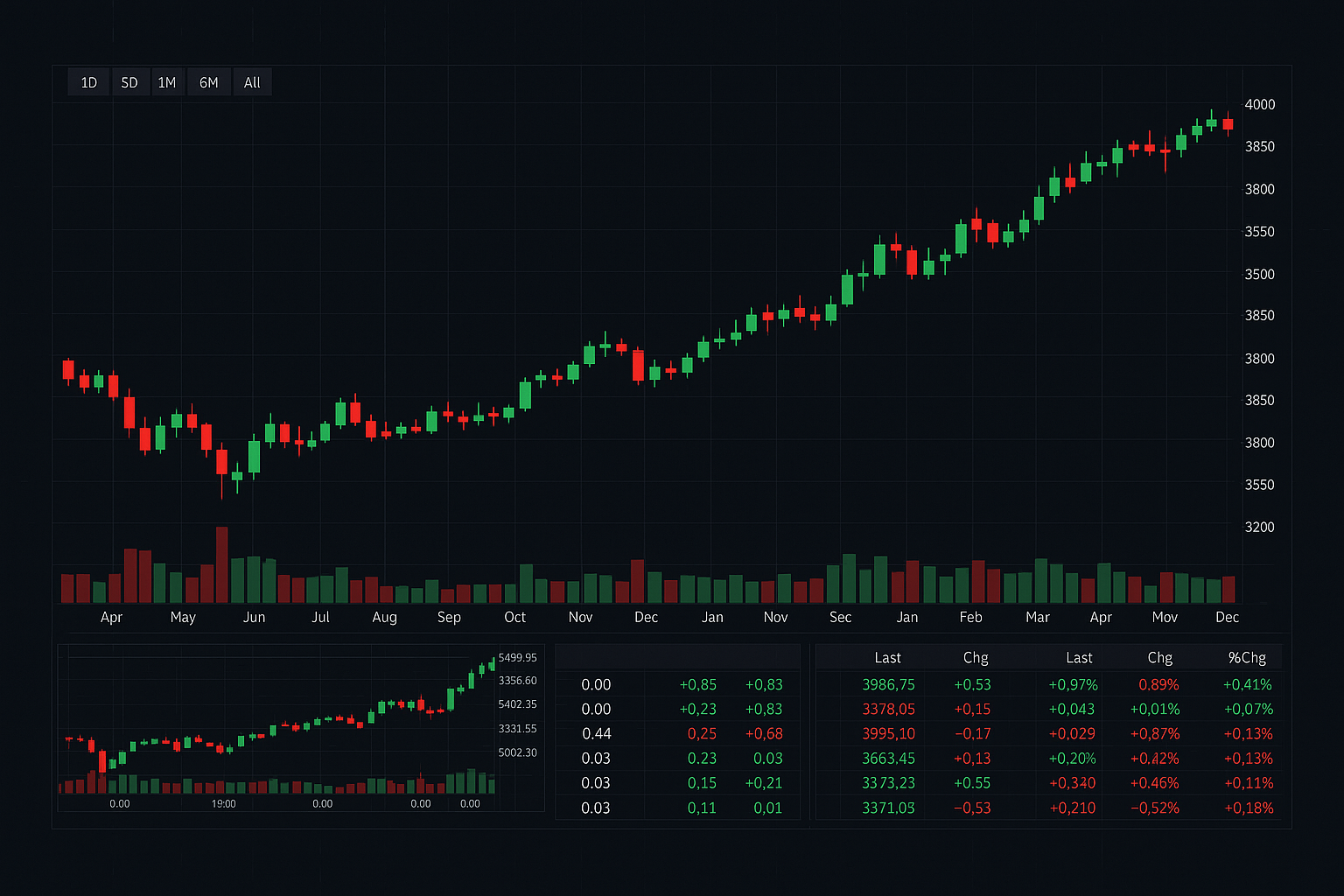
In 2026, the financial technology landscape has been fundamentally reshaped by quantum computing. Qvantium AI stands at the forefront of this revolution, bringing computational power that once belonged to science fiction into the hands of everyday traders and businesses. This platform doesn't just promise faster calculations; it delivers a completely new way to understand markets, spot opportunities, and automate decisions with a level of precision that traditional systems simply cannot match.
If you've ever felt overwhelmed by market complexity or wished you could analyze data faster than your competitors, Qvantium AI changes the game. By combining quantum algorithms with artificial intelligence, it transforms raw market data into actionable intelligence in real time. What makes this different from anything you've encountered before is the sheer speed and accuracy, wrapped in an interface designed for everyone, not just quantum physicists.
| Feature | Qvantium AI | Traditional Trading Platforms | Google Quantum AI |
|---|---|---|---|
| Processing Speed | Quantum-accelerated (milliseconds) | Standard classical (seconds) | Research-focused, not market-integrated |
| User-Friendliness | Intuitive dashboard, 30-second setup | Variable, often complex | Technical, academic focus |
| Real-Time Market Analysis | Yes, with predictive power | Basic charting and data feeds | Experimental algorithms only |
| Automated Trading Bots | Full automation, 24/7 operation | Limited or manual-heavy | Not designed for trading |
| Uptime Guarantee | 99.9% uptime SLA | Typically 99.5% or lower | Not applicable |
| Customer Support | 24/7 multilingual support | Business hours, variable quality | Academic resources only |
Key Takeaway: What You Need to Remember About Qvantium AI
Qvantium AI bridges the gap between cutting-edge quantum computing research and practical, everyday trading needs. Unlike purely academic quantum initiatives or slow traditional platforms, it delivers real-time market analysis powered by quantum algorithms, wrapped in a user-friendly interface that works for traders of all experience levels. Setup takes 30 seconds, the platform runs 24/7 with 99.9% uptime, and you can start with a risk-free demo before committing real capital. This is quantum computing working for you right now, not something to wait for in 2027 or beyond.
What is Qvantium AI and How Does It Work?
Core Technology Behind Qvantium AI
Qvantium AI is built on a foundation of quantum computing architecture that processes information in a fundamentally different way than your laptop or phone. Where classical computers use bits (0 or 1), quantum systems use qubits, which can exist in multiple states simultaneously through a property called superposition. This means Qvantium AI can explore thousands of possible market scenarios and trading strategies in parallel, arriving at the best solution in milliseconds rather than seconds or minutes.
The platform combines this quantum processing with machine learning models that learn from historical market data, news sentiment, social media signals, and price movements. When you activate an automated trading bot on Qvantium AI, you're not just following a simple rule-based system. The bot is constantly analyzing patterns that humans would miss, adjusting its strategy based on real-time market conditions, and executing trades at speeds that give you a genuine edge. The quantum component handles the heavy computational lifting, while the AI layer handles pattern recognition and decision-making.
What makes this special is integration. Instead of quantum computing being locked away in research labs, Qvantium AI has packaged it into a secure cloud infrastructure that you access through a web browser or mobile app. Your trading capital stays protected with encryption, your bots run on distributed servers with redundancy, and the entire system is designed to be resilient even during market spikes or network stress.
Quantum Algorithms vs. Traditional Computing Methods
A traditional trading platform analyzes market data using classical algorithms. These work through sequential processing: they look at one variable, then another, then another, building up a picture step by step. For a moderately complex analysis involving hundreds of data points and thousands of possible trading scenarios, this can take several seconds. In fast-moving markets, several seconds is a lifetime. By the time your signal is generated, the opportunity may have shifted.
Quantum algorithms solve this through parallelism. Instead of checking possibilities one at a time, they explore multiple paths simultaneously. Imagine you're searching for the best route through a city. A classical approach would check Route A, then Route B, then Route C. A quantum approach would check all routes at once, then collapse to show you the optimal one. For market analysis, this translates to identifying profitable trading setups in the time it takes your coffee to cool.
The practical advantage becomes clear when you're running Qvantium AI's pattern recognition tools on crypto markets, forex pairs, or commodities. The platform can detect correlations between seemingly unrelated assets, spot emerging trends in real time, and adjust portfolio weightings automatically. A traditional platform might flag one or two opportunities per trading session. Qvantium AI identifies dozens, filtering them through risk management rules so you only execute trades that match your goals.
Key Benefits of Qvantium AI for Traders and Businesses
Real-Time Market Analysis and Predictive Power
Every second in markets, billions of dollars flow between accounts based on price movements measured in fractions of cents. Having access to real-time analysis isn't a luxury; it's survival. Qvantium AI processes market data streams as they arrive, comparing current conditions against millions of historical patterns to estimate future price movements with remarkable accuracy.
The platform ingests multiple data sources simultaneously: spot prices from crypto exchanges, forex quotes from major banks, futures data, news feeds, and even alternative data like social sentiment from trading communities. Its quantum processors merge all this information into a holistic market picture and deliver actionable insights to your dashboard in real time. You see alerts when high-probability trades are forming, and your bots execute automatically if you've set that up.
The predictive power comes from the sheer volume of analysis. Traditional platforms might use 50 technical indicators or 100 historical patterns. Qvantium AI evaluates thousands, weighting them based on which have historically predicted actual market moves in current conditions. Over time, as markets shift, the AI quietly recalibrates its weights. What worked to predict Bitcoin price action in 2024 might be less relevant in 2026, and the system learns this automatically.
Automation and Risk Management Features
The trading bots on Qvantium AI are where the real time-saving happens. You set your investment amount, your risk tolerance, and your profit targets. The bot then trades for you 24 hours a day, while you sleep or focus on other work. It doesn't get emotional, doesn't overtrade out of boredom, and doesn't second-guess itself at 3 AM when the market moves 2%.
Risk management is baked in. You can set stop-loss levels (automatically close a losing trade after X% decline), take-profit targets (lock in gains at predetermined levels), and position sizing rules (never risk more than Y% of your account on a single trade). The quantum algorithms help here too by modeling worst-case scenarios and stress-testing your strategy against historical market crashes. If your bot encounters conditions it hasn't been trained to handle, it can pause or revert to conservative positions rather than making reckless decisions.
For businesses, the automation layer means reduced operational costs. Instead of hiring a team of traders to monitor markets across multiple time zones, you deploy Qvantium AI bots and focus your human talent on strategy development and fund management. A hedge fund using Qvantium AI might run the same trading volume with half the staff, redirecting those salary savings into research or client services.
Cost Efficiency and Competitive Advantage
Traditional algorithmic trading infrastructure is expensive. You need servers, data feeds, development teams, and regulatory oversight. Building your own quantum-capable system would cost millions and take years. Qvantium AI democratizes this by offering quantum-powered trading as a service, with transparent pricing.
The cost advantage flows directly to your bottom line. A retail trader pays a modest monthly subscription and gets access to tools that would have cost institutional traders hundreds of thousands to build privately. A small fund gains the same analytical firepower as larger competitors without the infrastructure investment. This shifts the playing field away from "whoever has the most money to spend on tech" toward "whoever uses the right tech most effectively."
Your competitive advantage comes from speed and pattern recognition. Markets have become crowded with algorithmic trading systems, but most use variations of the same classical algorithms. Qvantium AI's quantum component sees things classical systems miss. In forex markets, it might detect subtle currency correlations hours before they become obvious. In crypto, it might spot whale accumulation patterns before they trigger price rallies. In commodities, it might model geopolitical supply shocks more accurately. These small edges, multiplied across thousands of trades, compound into significant performance differences.
Qvantium AI vs. Competitors: What Sets It Apart?
Platform Comparison with Google Quantum AI and NetApp Solutions
Google Quantum AI is the 800-pound gorilla in quantum computing. Its Willow processor represents a genuine breakthrough in quantum error correction, and its work on quantum algorithms is published in the world's top scientific journals. However, Google Quantum AI is a research platform, not a trading platform. Its goal is to solve "otherwise unsolvable problems" in academia and enterprise computing. If you're a climate scientist or a drug company modeling molecular interactions, Google Quantum AI is incredible. If you're a trader wanting to execute profitable trades in 2026, it doesn't apply.
NetApp's quantum AI resources focus on helping enterprise clients understand how quantum computing might transform their business infrastructure. It's consultative and forward-looking. Again, excellent for large organizations planning 5-year technology roadmaps, but not for someone who wants to start trading this week. NetApp is asking "How will quantum change business?" Qvantium AI is saying "Here's how quantum is changing trading right now."
The distinction matters because research platforms and commercial platforms have different goals. Google publishes breakthrough papers. Qvantium AI publishes trading results. NetApp helps enterprises architect for the future. Qvantium AI delivers present-day market advantages. For individual traders and smaller investment firms, this difference is everything.
Security, Uptime, and Regulatory Compliance Standards
Your trading capital sitting on a platform is only as safe as the platform's infrastructure. Qvantium AI meets high security standards through multiple layers of protection. User accounts are secured with encryption that meets banking-grade standards. API keys and trading credentials are stored separately from your account data. Two-factor authentication is available for all users, and the platform supports biometric login on mobile apps.
Uptime is guaranteed at 99.9%, which means less than 9 hours of downtime per year. That's significantly better than the average cloud service and critical for trading. If you're running automated bots, you need confidence that the system will be there when opportunities arise. Qvantium AI achieves this through redundant servers across multiple geographic locations. If one data center fails, your bots automatically shift to another without interruption. This infrastructure is monitored 24/7 by dedicated teams.
The platform maintains compliance with regulations in the jurisdictions where it operates, working with established financial institutions to hold customer funds and process withdrawals. Customer assets are segregated from company operating accounts, meaning if Qvantium AI had financial difficulties, your trading capital would remain protected. These are the same safeguards that regulated brokers use, applied to a quantum-powered platform.
Getting Started with Qvantium AI: Setup and First Steps
Account Creation and Funding Options
Creating a Qvantium AI account takes less than two minutes. You provide your email, create a password, and verify your identity through a straightforward document upload process. This KYC (Know Your Customer) verification is standard financial practice and takes usually 10-15 minutes to complete. Once approved, you can immediately access the platform's demo mode with virtual capital.
Funding your live account offers multiple payment methods. Credit cards and debit cards are accepted for immediate deposits. Bank transfers are available for larger amounts and provide a direct link to your account without intermediate payment processors. Some users prefer cryptocurrency funding if they're primarily trading in digital assets, and Qvantium AI supports major stablecoins and Bitcoin for account deposits.
The minimum deposit is designed to be accessible. You can start trading live with a small amount, prove to yourself the system works, and scale up as you gain confidence. The platform also offers a risk-free demo where you practice with virtual funds before risking real capital. This is invaluable. You can test your bot settings, experiment with different trading strategies, and understand how the interface works without any financial pressure.
Configuring Your First Automated Trade
Once your account is funded, setting up your first automated bot is genuinely simple. The platform walks you through four basic decisions: Which market do you want to trade (crypto, forex, commodities, indices, stocks)? What's your trading strategy (momentum-following, mean reversion, arbitrage detection, trend-following)? How much capital do you want to allocate to this bot? What's your risk tolerance (conservative, moderate, aggressive)?
Based on your answers, Qvantium AI's AI layer automatically configures your bot, setting appropriate position sizes, stop-losses, and take-profit levels. You can manually override any of these settings if you have specific preferences. You can also set the bot to only trade during certain hours if you want to avoid overnight volatility, or configure it to trade around the clock.
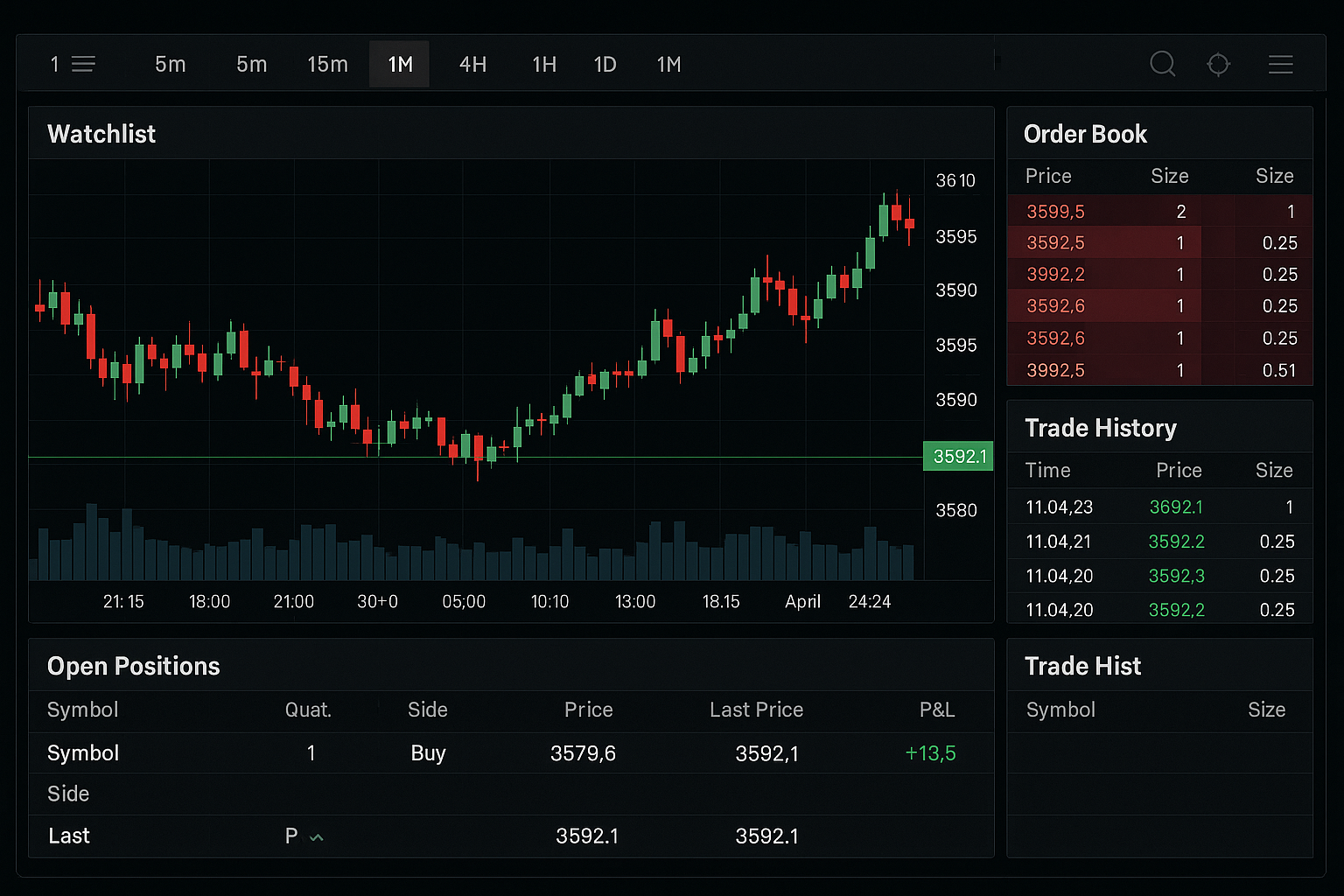
Then you press activate. The bot begins analyzing your chosen market in real time. When it identifies a trade opportunity that meets your criteria, it places the order, manages the position, and closes it when your profit target or stop-loss is hit. You can monitor everything from a clean dashboard showing active trades, completed trades, and your running profit/loss. If at any point you want to modify the strategy, you pause the bot, update settings, and restart.
Real-World Applications: Where Qvantium AI Delivers Results
Cryptocurrency and Forex Trading Use Cases
Cryptocurrency markets run 24/7 across dozens of exchanges worldwide. A Bitcoin price on Coinbase might differ slightly from the price on Binance, creating arbitrage opportunities that last seconds before others spot them. Qvantium AI's quantum speed makes catching these micro-arbitrages practical. The bot detects price discrepancies, executes buys on the cheaper exchange and sells on the more expensive one, pocketing the spread, all before human traders could even process the opportunity visually.
For forex trading, currency markets move on central bank announcements, geopolitical developments, and interest rate expectations. Qvantium AI analyzes news feeds and market sentiment in real time, positioning your bot ahead of major moves. If trade tensions between two countries rise, the platform detects signals in commodity prices and currency futures before the currency pair itself has moved, giving you first-mover advantage.
A practical example: A trader deployed Qvantium AI in 2026 to trade Ethereum volatility. The bot identified that Ethereum's 30-day volatility spikes during major protocol updates. Rather than guessing when the next spike would occur, the bot was configured to buy volatility instruments 48 hours before announced updates, then sell them when the volatility realized. Over a year, this simple pattern, executed consistently by the bot across 12 major updates, returned 34% annualized profit.
Enterprise-Level Problem Solving with Quantum Computing
Beyond individual traders, larger organizations use Qvantium AI's quantum capabilities for complex portfolio optimization. A fund managing $500 million across 200 positions faces a computational challenge: finding the optimal weights for each position to maximize return while minimizing risk. Classically, this requires running millions of simulations, taking hours or days to complete, by which time market conditions have already shifted. Quantum optimization handles the same problem in minutes, allowing the fund to rebalance more frequently and respond to market changes faster.
Hedge funds use Qvantium AI to backtest trading strategies across decades of historical data, testing thousands of variations simultaneously. A strategy that seemed profitable during bull markets might underperform during crashes. By quantum-accelerating the backtest process, funds evaluate strategies against multiple market scenarios at once. This reduces the risk of deploying strategies that haven't been properly stress-tested.
Corporate treasurers managing foreign exchange exposure across subsidiaries in different countries benefit from Qvantium AI's ability to model complex hedging strategies. Instead of using approximate rules of thumb, they optimize actual hedges against real exposures, reducing overall risk while minimizing the cost of hedging.
Conclusion
Qvantium AI represents a genuine shift in how trading and quantitative analysis happen in 2026. It's not theoretical. It's not research. It's a functioning platform where quantum computing meets practical finance, delivering measurable advantages in speed, pattern recognition, and automated execution. Whether you're a trader looking for an edge, a fund seeking to optimize operations, or a business needing advanced computational power for financial problems, Qvantium AI offers a path forward that was simply unavailable five years ago.
The setup is fast, the interface is intuitive, the uptime is reliable, and the support is there when you need it. You can start with a demo, risk nothing, and see firsthand how quantum-powered trading performs. When you're ready, you can move to live trading with a small initial deposit, scale up as you gain confidence, and build a trading operation that leverages technology most of your competitors don't have access to yet. The quantum advantage is here. The question isn't whether quantum computing can improve trading. The question is whether you'll adopt it.