Imagine having a trading system that tests every strategy in a sandbox before risking a single dollar of real capital. That's the promise of Apex Flow Trade, a sophisticated institutional-grade platform built for traders who want certainty before commitment. Whether you're managing a portfolio, scaling a quantitative strategy, or simply tired of guessing whether your trading ideas actually work, this approach transforms how modern investors validate and deploy their market moves.
In 2026, the gap between casual retail trading and professional-grade infrastructure has never been wider. Apex Flow Trade bridges that divide by combining paper trading precision, multi-venue execution, and governance layers that feel more like a bank's risk committee than a gamified app. If you've ever wondered what separates traders who survive from those who thrive, a significant part of the answer sits in systems like this one.
| Feature | What It Does | Benefit for You |
|---|---|---|
| Shadow Mode Paper Trading | Run strategies without touching live markets first | Zero financial risk during testing |
| Bayesian Confidence Gates | Auto-verify strategy performance before activation | Confidence in live deployment |
| Smart Order Routing | Route orders across multiple venues automatically | Better fills, lower slippage |
| Multi-Approver Governance | Require sign-off before any strategy goes live | Built-in checks, reduced emotional trading |
| Audit Trail & Transparency | Hash-chained logs of every trade and decision | Full accountability and compliance |
Key Takeaway
Apex Flow Trade separates strategy validation from live execution. You get institutional-grade risk controls, paper-first testing, and multi-level approval gates, all designed to help you move capital only when your edge is proven. This isn't about adding more indicators, it's about adding confidence to every trade.
What Is Apex Flow Trade and How Does It Work?
Core Mechanics of Apex Flow Trading Systems
Apex Flow Trade operates on a simple philosophy: prove your strategy works before betting real money. The system starts every new trading idea in shadow mode, which means your strategy runs against real market data and receives real order fills, but no actual capital leaves your account. You're watching how your logic performs in live conditions without any financial exposure.
Here's how it unfolds in practice. You design a trading strategy, upload it to the platform, and immediately see how it would have performed over the past week, month, or year. The system feeds it real market data, simulates the exact execution path your orders would take, and measures the slippage and transaction costs you'd actually face. If your strategy assumes it can buy 1,000 shares at the mid-price, the system shows you that the real execution would happen 2 ticks worse due to market impact, and it adjusts your profitability calculation accordingly.
Once you're confident in the paper results, Apex Flow Trade introduces a validation gate. The platform watches your strategy trade in shadow mode for 14 consecutive profitable days, building statistical confidence that your edge isn't just luck. Only when this confidence threshold is crossed does the system propose your strategy for live activation. This isn't automated, automatic promotion. A human must explicitly approve moving real capital into the position.
The beauty of this workflow lies in its transparency. Every trade is logged with full audit detail: the market conditions, the order routing decision, the fill price, the reason the strategy triggered, and any risk flags that appeared. When you look back at your results, you're not guessing why a trade won or lost. You have the data.
Key Differences Between Paper Trading and Live Execution
Paper trading feels safe but can hide dangerous illusions. Traditional paper trading platforms often assume perfect execution: your orders fill at mid-price, slippage doesn't exist, and there's no market impact. If your strategy works beautifully in that fantasy world but collapses when you go live, you've just learned an expensive lesson.
Apex Flow Trade paper trading is different. The shadow mode uses real order books and real execution models to simulate how your orders would actually be filled. If you're placing a large order in a thin market, the system shows you the real slippage you'd face. If you're scalping, it accounts for the spreads you'd encounter. If you're trading options, it models volatility surfaces realistically. The paper results are therefore far more honest about whether your edge survives real conditions.
When you move to live execution, nothing fundamental changes in how the platform operates, except that capital actually moves. Your orders still route through the same smart order router, your strategy still operates under the same risk limits, and every trade still flows through the same audit log. The confidence you built during paper testing carries directly into live trading. There's no hidden gotcha, no sudden change in how things work. The only change is that this time, the money is real.
This continuity matters psychologically too. You're not switching from a sandbox toy to a professional platform. You're simply flipping a governance switch on a platform you've already learned and tested. That removes a layer of fear and guesswork from the live trading transition.
Essential Features to Look for in Apex Flow Trading Platforms
Smart Order Routing and Execution Quality
Where your order gets filled determines whether you profit or lose. A strategy that looks brilliant on paper can collapse into mediocrity if your execution is poor. Smart order routing solves this by automatically sending your orders to the venue most likely to give you the best price and fill speed.
Apex Flow Trade routes across multiple exchanges and liquidity pools simultaneously, constantly measuring which venues are offering the tightest spreads and best liquidity for your specific order size. Imagine you want to buy 500 shares of a highly liquid stock. The system might split this into 200 shares on Exchange A where the spread is 1 cent, 200 shares on Exchange B where there's deep liquidity, and 100 shares through a dark pool where it can get a midpoint fill on a large block. All of this happens in milliseconds, without you manually choosing venues.
The platform then measures every fill against a benchmark. Did you actually get a better price than the market average? Or did you pay more than you should have? This telemetry becomes your feedback loop. Over time, you learn which strategies tend to suffer from market impact and which ones execute cleanly. A scalping strategy that loses 3 basis points to bad execution might not be worth running, even if it's theoretically profitable. That insight only comes when you measure it.
The execution quality dashboard shows you spreads, toxic fills, and slippage across all your strategies. You can see which market conditions favor your approach and which ones work against you. On some days, your strategy might execute beautifully. On others, when spreads widen and liquidity dries up, the same strategy might underperform. Knowing this difference helps you decide whether to run your strategy every day or only on liquid days.
Risk Management and Safety Governance Layers
Risk management isn't optional in professional trading, it's everything. A strategy that can double your account is only useful if it can't blow it up first. Apex Flow Trade embeds multiple safety layers so deeply into the platform that it's nearly impossible to accidentally take on too much risk.
First comes portfolio heat tracking. The system knows your total exposure across all strategies, all venues, all asset classes. If you run five different strategies simultaneously, it calculates how much market risk you're carrying in aggregate. If a market crash hits, how exposed are you? What's your worst-case loss if volatility spikes? This isn't theoretical risk management, it's real-time monitoring of actual portfolio damage potential.
Second comes the multi-approver governance gate. Before any strategy can trade live capital, multiple team members must sign off. This alone prevents a single trader from making an impulsive decision to activate a strategy that hasn't been properly validated. If your strategy passes paper testing but your risk manager sees something concerning about its behavior in volatile markets, that person can block activation. This creates a natural debate around risk that catches problems before they cost money.
Third comes the audit trail. Every governance decision is recorded on a tamper-proof hash chain. Who approved this strategy? When? What did the paper performance look like at approval time? If something goes wrong later, the full decision history is preserved. This accountability structure makes people more careful. It's one thing to override a safety gate, it's another thing to have that override recorded permanently in the audit log.
Fourth comes automated kill switches. If a strategy starts losing money faster than expected, or if market conditions change dramatically, the platform can automatically pause or close the position. You set the rules in advance, and the system enforces them mechanically. There's no emotion, no hope that the market will turn around, no doubling down on a bad bet. The machine stops it.
Performance Metrics and Strategy Validation
Numbers that look good can hide ugly truths. A strategy might show 20% annual returns, but if it achieved that by taking massive risk in a single lucky month, that number is misleading. Apex Flow Trade digs deeper into performance to show you what's really happening.
The platform calculates Bayesian confidence scores for your strategies. This is a statistical approach that accounts for the fact that trading results contain randomness. Early on, a strategy's results are noisy. Ten profitable trades could just be luck. But as the strategy accumulates 100 trades, 500 trades, 1,000 trades, the results become more reliable. Bayesian analysis updates your confidence continuously as new data arrives. The platform shows you this confidence explicitly so you know whether your current results are repeatable or just fortunate.
Edge decay analysis tracks whether your strategy's profitability is holding steady or declining. Many trading edges have a limited lifespan. A market inefficiency might be highly profitable for the first month, then as other traders discover it, your edge shrinks. Apex Flow Trade monitors this decay curve. If your strategy was making 5 basis points per trade and now it's making 2 basis points, the system alerts you. This helps you decide whether to scale back, retire the strategy, or pivot to a new version.
The performance dashboard also shows regime compatibility. Some strategies work beautifully in trending markets but fail in choppy sideways markets. Other strategies thrive in volatility but die when everything is calm. By analyzing your strategy's performance across different market regimes, you get realistic expectations for what to expect in different conditions. You don't expect your mean-reversion strategy to work in a strong uptrend, but you do expect it to work when the market is ranging.
Tournament ranking lets you compare multiple strategies side by side. If you're testing ten different trading ideas, you need to know which ones are actually generating the best risk-adjusted returns. Apex Flow Trade ranks your strategies by expectancy, Sharpe ratio, and other performance measures so you can allocate capital to the best performers first.
How to Set Up and Deploy an Apex Flow Trading Strategy
Pre-Deployment Testing and Bayesian Confidence Gates
The journey from idea to live trading happens in deliberate stages. You don't go from zero to risking real capital in one step. Instead, you build confidence progressively through structured testing.
Start by defining your trading logic. What market conditions trigger your strategy? What size do you want to trade? What are your risk limits? At this stage, you're writing the rules that the platform will execute. This might be a moving average crossover, a mean reversion signal based on volatility bands, an options selling program, or anything else. The platform supports a wide range of strategy types.
Once your logic is defined, you backtest it. Apex Flow Trade runs your strategy against years of historical market data, calculating how it would have performed if you'd been trading this way in the past. This backtest is more realistic than most platforms offer because it uses actual market depth data, simulating real order book dynamics rather than just using daily closing prices. You get a genuine sense of how this strategy behaves under real market conditions.
But backtest results are notoriously overoptimistic. The temptation is to tweak your parameters until the backtest looks amazing, creating a strategy that fit perfectly to the past but won't work in the future. To prevent this overfitting trap, Apex Flow Trade uses out-of-sample validation. The platform runs your strategy on market data it hasn't seen before, showing you whether your results hold up in new conditions.
Once you've validated your approach historically, you move into paper trading. This is where your strategy runs against live market data in shadow mode. Unlike backtest data, which is static history, paper trading runs in real time. You watch your strategy trade through real market conditions, real spreads, real order books. Your orders get routed through the same venues as live trading would use. The only thing that's not real is that your capital isn't actually at risk.
The Bayesian confidence gate watches this paper trading carefully. Your strategy needs to show 14 consecutive profitable days before the system proposes it for live activation. Why 14 days? That's enough time to see your strategy operate through different market conditions: trending days, choppy days, volatile days, quiet days. It's enough data to be fairly confident that your edge isn't just noise. But it's not so much data that you're waiting months to move forward.
Once the confidence gate is satisfied, the platform generates an activation proposal. This proposal includes your paper trading performance, the edge decay analysis, the regime compatibility assessment, and the full audit trail of how you arrived at this point. This package goes to your approvers for review.
Multi-Approver Governance and Activation Protocols
No single person decides whether to activate a new trading strategy. Apex Flow Trade requires multiple approvals, creating a natural check on impulsive or dangerous decisions. The approval flow typically involves your strategy manager, your risk officer, and potentially your chief investment officer, depending on the size and complexity of what's being activated.
Each approver sees the full performance history. They review the paper trading results, the Bayesian confidence scores, and any red flags the platform has identified. If everything looks good, they sign off. If there's concern, they can block activation, requiring changes to the strategy, more paper trading time, or more detailed analysis before anyone can activate it.
Once all approvers have signed off, you're ready to go live. But even at this stage, the strategy doesn't start at full size. Most platforms deploy new strategies with reduced position limits, at least initially. Your strategy might be approved to trade 1,000 shares, but you start with 100 shares. As you see live performance matching paper performance, you can gradually increase position size, building confidence that your live results mirror your backtested and paper results.
Throughout this live ramp, you're monitoring closely. The execution telemetry dashboard shows you how your live fills compare to your paper simulations. If real execution is significantly worse than paper simulations predicted, you now know there's a problem to solve. Maybe your model of market impact was too optimistic. Maybe the venues you're routing to have changed. Maybe your order size is larger than you realized in the actual market context.
If live performance diverges from paper performance, you stop and investigate. This might mean pausing the strategy, adjusting parameters, or even retiring the strategy entirely. The structure Apex Flow Trade creates makes this investigation natural and expected, not a source of shame or second-guessing.
Apex Flow Trade Performance: Expected Returns and Real Results
Measuring Edge Decay and Strategy Profitability
An important reality of trading is that most edges decay. A strategy that works beautifully for your first six months of trading might stop working by month twelve, not because you've done anything wrong, but because the market has adapted. As more traders discover and trade the same pattern you've discovered, the profit shrinks. Understanding this decay curve is critical to long-term survival.
Apex Flow Trade measures edge decay continuously. The platform compares your strategy's profitability over rolling windows: How profitable was it last month? This month? Last week? This week? By looking at these trends, you can see whether your edge is stable, declining, or gone entirely. A strategy that was making 10 basis points per trade last quarter but only 5 basis points this quarter is decaying. You might choose to retire it, trade it at smaller size, or spend time researching why the decay occurred.
Profitability measurement goes beyond simple profit and loss. The platform calculates your Sharpe ratio (return per unit of risk), your Sortino ratio (return per unit of downside risk), your maximum drawdown, your win rate, and your expectancy (average profit per trade). These metrics give you a complete picture of how your strategy is performing.
The platform also accounts for realistic costs. You're not seeing theoretical profits, you're seeing profits after paying for execution, fees, and any other real-world expenses. If your strategy generates 2 basis points of profit on average but costs 1.5 basis points to execute, your net edge is only 0.5 basis points. That might still be worth trading at scale, or it might be too small to bother with. The platform shows you this clearly.
One powerful feature is the regimen compatibility matrix. Your strategy might look profitable in aggregate, but the platform breaks down performance by market regime. How does your strategy do in trending markets? Sideways markets? Volatile markets? Calm markets? Market open versus close? By asset class? By volatility regime? This regime breakdown often reveals that your strategy is actually dependent on specific market conditions being present. You're not a universally profitable strategy, you're profitable when markets look like this. That clarity lets you make better decisions about when to run your strategy and when to pause it.
Comparing Shadow Mode Results Against Live Trading Data
Here's a fundamental question that keeps traders awake at night: Will my live results match my paper results? The gap between simulated trading and actual trading has destroyed countless strategies. Market impact was worse than expected. Execution was more slippage-prone than modeled. Liquidity dried up at critical moments. All of these real-world complications can turn a profitable strategy into a losing one.
Apex Flow Trade bridges this gap by making shadow mode as realistic as possible. When your strategy is running in paper, it's using the same execution models, the same order routing, and the same market data feeds as your live strategy will use. The fills your strategy receives in paper trading should closely match the fills it receives in live trading, because the underlying simulation is identical.
As you run live, the platform continuously compares your live results against your shadow results. If your strategy generated 50 basis points of profit per month in paper trading over three months, and now that you're trading live it's only generating 30 basis points, you've got a problem worth investigating. Maybe market conditions have changed. Maybe your execution model was too optimistic about spreads. Maybe there's slippage your backtest didn't anticipate.
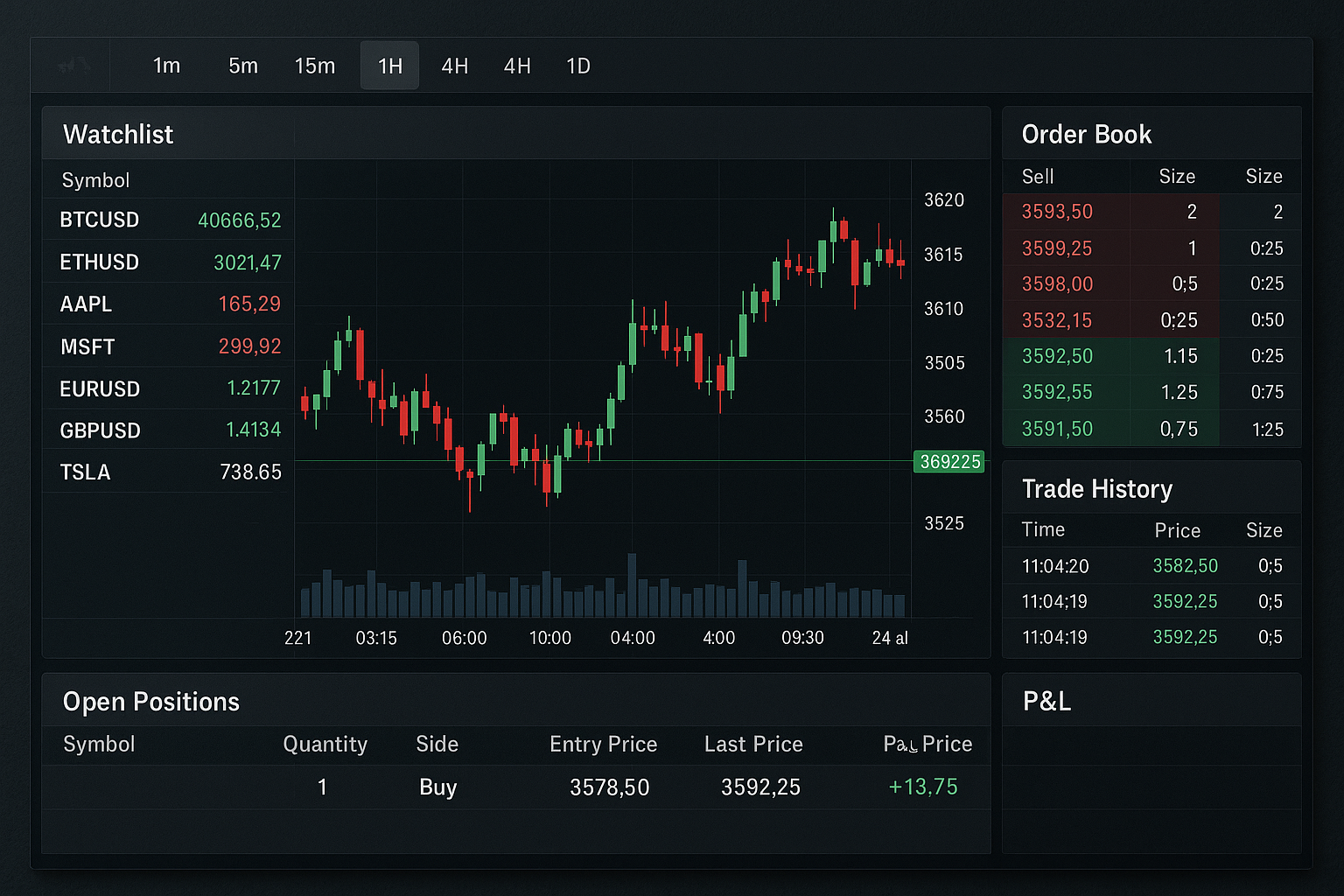
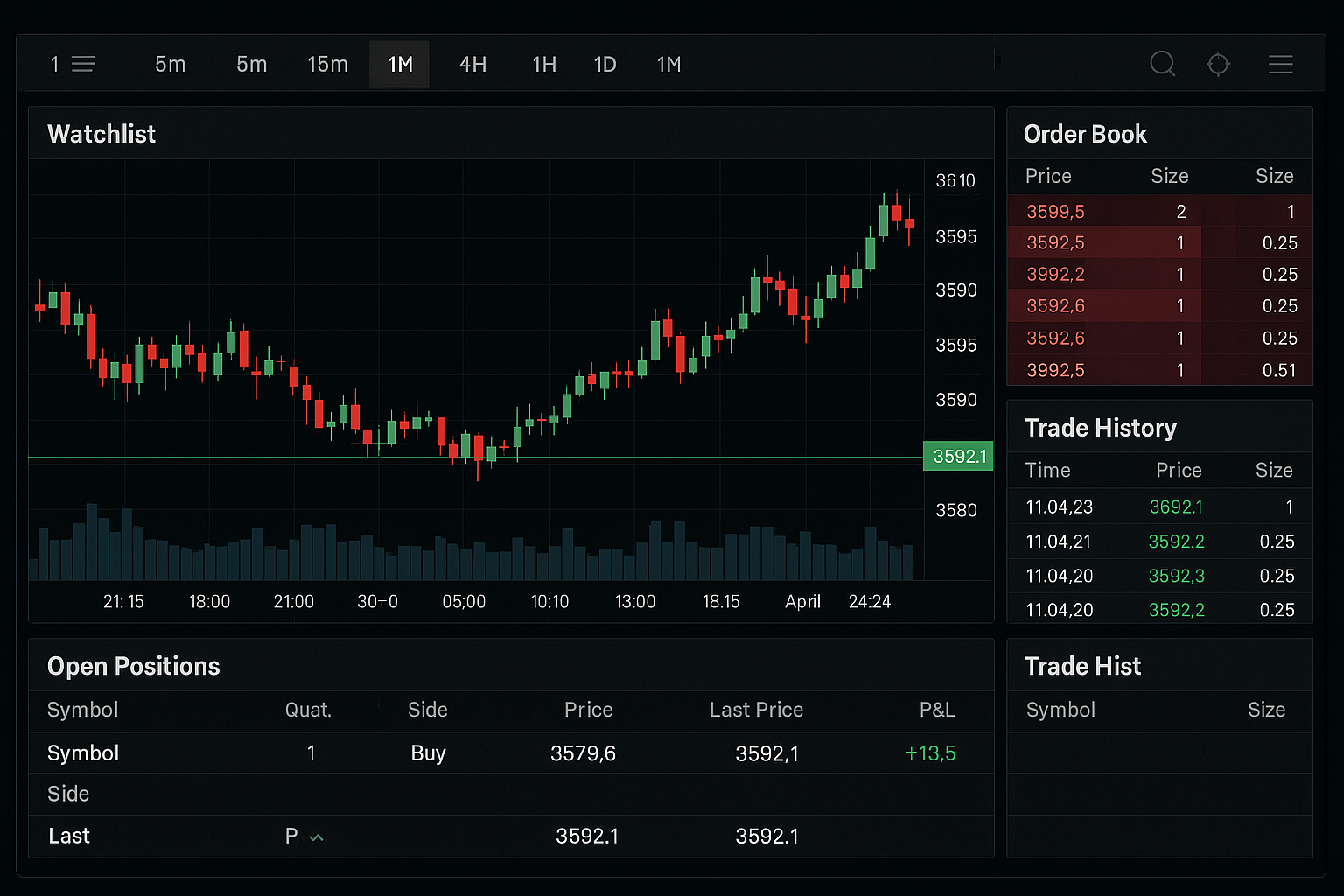
The comparison dashboard shows this side by side. Left column is shadow mode results from the same time period. Right column is live results. Are they aligned? If not, where's the divergence? You can drill down to specific trades to see which orders executed differently than expected. This diagnostic process transforms a vague sense of underperformance into actionable intelligence.
For managers overseeing multiple traders or multiple strategies, this comparison becomes a powerful accountability tool. Every strategy has a paper performance record and a live performance record. The expectation is that live performance should closely track paper performance. If someone's live results are consistently worse than their paper results, that's a sign they might need better training on execution discipline, or their strategy might need to be retired.
Apex Flow Trade vs. Traditional Trading Platforms: Which One Wins?
Institutional-Grade Features vs. Retail Trading Tools
Walk into a traditional retail trading platform and you see a colorful charts interface, a screener for finding stocks, maybe some backtesting tools. It's designed to feel accessible and fun. Walk into Apex Flow Trade and you see risk dashboards, governance workflows, audit trails, and Bayesian confidence scoring. The contrast is stark.
Traditional platforms assume you want to trade actively and frequently. They light up your phone with alerts, show you real-time quotes for hundreds of stocks, and make it easy to place an order in seconds. The design philosophy is permission and speed: let the trader do whatever they want, as fast as possible.
Apex Flow Trade assumes you want to trade systematically and safely. It shows you regime compatibility analysis and edge decay curves and portfolio heat. The design philosophy is validation and caution: make sure the trade is good before you place it, and make sure the system agrees it's a good idea before any capital actually moves.
For a retail investor making a few trades per month, Apex Flow Trade is overkill. You probably don't need multi-approver governance or Bayesian confidence gates. But as soon as you're managing money for others, running multiple strategies simultaneously, or trying to scale your trading operation, the institutional-grade features become genuinely valuable. You need to know your portfolio heat. You need to compare your strategies fairly. You need to audit your decisions. You need to prove to regulators and auditors that you've got proper risk controls in place.
The difference between these approaches shows up in results. Retail platforms are designed for engagement and entertainment. You'll trade more frequently, make more emotional decisions, and probably underperform. Apex Flow Trade is designed for accuracy and discipline. You'll trade less frequently, make more deliberate decisions, and likely outperform. The institutional features aren't decoration, they're the actual source of edge.
Cost-Benefit Analysis and Implementation Timeline
Apex Flow Trade is more expensive than a basic retail trading platform. You're paying for the institutional-grade infrastructure, the smart order routing, the audit logs, the governance workflows, and the support from people who understand quantitative trading. A retail platform might cost you fifty dollars a month. Apex Flow Trade might cost you several hundred dollars per month or more, depending on your usage and capital deployed.
But the math is compelling if you're actually trading with size. If you manage one million dollars in capital and your strategy has a 1% edge, you're generating ten thousand dollars per month. Saving two basis points on execution through smart order routing adds another two thousand dollars per month. Building confidence through paper testing rather than learning painfully with live capital could save you tens of thousands in mistakes. The institutional platform quickly pays for itself.
Implementation takes time. You can't sign up and start trading live in an hour. You need to define your strategies, build and validate your trading logic, run through paper testing with sufficient confidence gates, get your governance team aligned, and only then activate live trading. The full cycle might take two to four weeks for a simple strategy, or several months for something more complex.
But this implementation time is a feature, not a bug. It forces rigor into your process. You can't just have an idea and trade it immediately. You have to define it, test it, validate it, and get multiple people to agree it's a good idea. This structure catches many bad ideas before they cost money. The traders who rush implementation, who skip the paper testing phase or pressure their governance team to approve untested strategies, they're the ones who blow up accounts. Slowing down and requiring validation saves money in the long run.
For an active trading operation or a quantitative hedge fund, Apex Flow Trade becomes a core piece of your infrastructure. You'll likely spend the implementation time once, then benefit from the system for years. The ROI is substantial, measured in avoided losses and captured edges.
Conclusion
Apex Flow Trade represents a shift in how modern traders validate and deploy capital. Rather than betting with hope, you bet with evidence. Rather than moving money based on backtesting alone, you move money based on paper trading, governance approval, and Bayesian confidence assessment. Rather than crossing your fingers that live execution will match your simulations, you measure it directly and pause when it doesn't.
This approach isn't revolutionary or exotic. It's simply what professional asset managers have been doing for decades. The innovation is making these professional-grade processes accessible and affordable for traders and smaller funds who were previously locked out of this level of sophistication. If you're serious about trading performance, about managing risk, and about scaling your operation with discipline, Apex Flow Trade deserves a close look. The platform's commitment to paper-first validation, multi-layer governance, and transparent performance measurement creates the conditions where sustainable trading edges actually survive and thrive.